

October 28, 2026
Just a few weeks ago, recent events surrounding the Starshield/Starlink network once again starkly revealed how dependent Europe is on the United States when it comes to security-critical and strategic key technologies. Sovereignty in space and secure communication solutions there are no longer just “nice-to-haves,” but are vital for survival in an increasingly interconnected world. Yet just a few months ago, the financial markets were eagerly awaiting SpaceX’s initial public offering, which brought a great deal of attention to the New Space sector this year. The growing demand for proprietary solutions is just one of the reasons why private investors—particularly venture capitalists—are currently pouring large amounts of money into this technology sector. The following text provides an overview of the opportunities they see, as well as the risks involved in this bet on space.
From a Pioneering Project to a Commercial Infrastructure Market
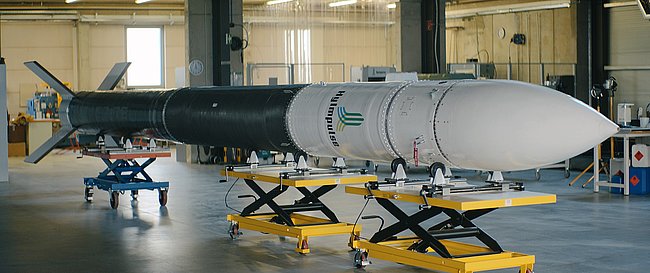
Ever since the successful launch of the Isar Aerospace “Spectrum” rocket and a record-breaking Series C funding round for The Exploration Company totaling over 450 million EUR in early September, one thing has become clear: private spaceflight has finally left the phase of pure pioneering behind. A sector that for decades was the exclusive domain of governments and national space agencies has rapidly evolved into a highly commercial infrastructure market with numerous providers and applications.
The need is urgent: All in all, this market could grow to nearly $2 trillion in annual revenue by 2035, according to McKinsey’s forecast. This enormous growth potential is linked, on an economic and technological level, primarily to the following factors:
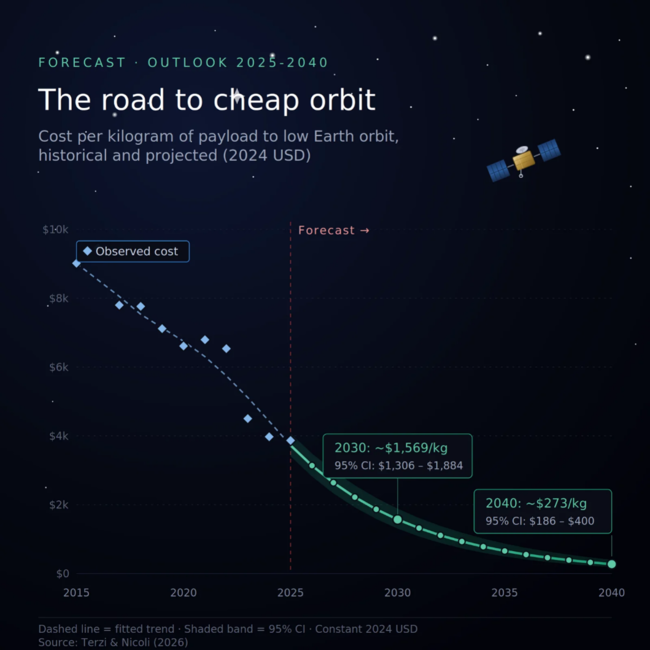
Drastic reduction in launch costs: Reusable launch vehicles exponentially reduce transportation costs per kilogram of payload, making access to space significantly more economical. Specifically, launch costs have fallen by 90% over the past 20 years, a trend to which SpaceX has contributed significantly.
Industrialization of satellite manufacturing: Miniaturization and standardization of electronic components are replacing cost-intensive custom-built parts. This means that satellites are increasingly being mass-produced and are therefore also becoming more affordable.
Scalable downstream applications: While the upstream sector provides the physical infrastructure in orbit, the greatest commercial potential lies in the downstream sector—that is, the use of data, signals, and connectivity on Earth. The processing of satellite data into B2B applications enables highly scalable Data-as-a-Service and software models. As a result, the sector is tapping into broad markets beyond the space industry itself—such as agriculture, the energy sector, logistics, and the finance and insurance sectors.
In addition, economic and security policy considerations create a need for action: Germany’s space security strategy attaches growing importance to issues such as space surveillance and space domain awareness. And rightly so, as we are currently seeing: Earth observation, navigation, and satellite communications constitute critical infrastructure, form an important pillar of European sovereignty, and are increasingly relevant to security and defense as well. In a crisis, soldiers’ lives may depend on it. European initiatives are therefore also pushing for their own capabilities in space.
Startups as Drivers of Innovation Along the Value Chain
Young technology companies are harnessing and accelerating this new momentum by bringing innovations to market significantly faster. They rely on agile development processes, standardized components, and often a high proportion of software. This further reduces development times and production costs.
At the same time, startups and scaleups are developing new business models across the entire value chain. These include, among others:
As a result, many of these companies are serving markets that barely existed a few years ago or could not be addressed by private companies. Others are replacing existing technologies with significantly more efficient, specialized solutions.
Huge Capital Requirements and High Risk of Failure: Not a Case for the Local Bank
Despite the sector’s political significance, these SpaceTech startups rely on venture capital. Development costs are high and, in many cases, tied to intensive research, extensive testing, and complex certification processes. Extremely long sales cycles are to be expected, particularly with public and military clients. At the same time, high costs for personnel, prototypes, and production capacity arise early on. Depending on the business model, capital requirements can total several hundred million euros across the various growth phases.
Furthermore, many SpaceTech startups initially carry out individual development projects in the early stages before scalable mass-produced products are created. Consequently, significant revenue is often deferred to a later stage in the company’s development. As is typical for DeepTech, debt instruments are not an option until later phases due to unpredictable cash flows and the lack of valuable collateral. Given the risk involved, venture capital—that is, equity—is therefore the only financing option, especially in the early stages.
Investors, for their part, must understand that SpaceTech—especially hardware-focused SpaceTech—is, like all DeepTech applications, extremely capital-intensive and involves long development and commercialization phases. Capital may therefore be tied up for longer than in other asset classes. Technical setbacks, failed launches, or damaged satellites have significant financial implications. Even if everything goes according to plan, the exit risk remains: strategic buyers are limited, and the often high valuations can make a potential acquisition unattractive. As a
result, the stock market is often the only viable exit channel; depending on market sentiment, this poses a risk for venture capital investors, who are not permitted to sell their shares until after a lock-up period has expired.
Astronomical Valuations? Venture Capital Follows Clear Return Expectations
There are sound economic reasons why substantial amounts of capital are flowing into the SpaceTech sector despite high capital requirements and long development times:
To ensure the right risk-reward ratio for venture capital investors, they focus not only on technological excellence but also, and above all, on the following criteria in the SpaceTech sector:
Regional Factors: Germany and Bavaria as Leading Space Hubs
In Germany, Bavaria in particular has established itself as a hub for NewSpace technologies. And for good reason: With IABG, Bavaria serves as a technological hub in Europe for space infrastructure, particularly in specialized testing. The GSOC control center at the DLR in Oberpfaffenhofen is one of the most modern in the world. By 2027, the construction of the HECC Human Exploration Control Center there is also set to establish a new standard for robotic and crewed space missions. The AZO Application Center and initiatives by the Bavarian state government, such as bavAIRia, are also based there.
Also worth mentioning is the Bundeswehr Innovation Center in Erding, which provides companies with access to the defense market, as well as the University of the Bundeswehr, which promotes a high level of research in the space sector. Furthermore, few locations in Europe offer comparable access to engineers with expertise in manufacturing—such as in plant engineering and production planning—who are essential for the production of complex high-tech systems. It comes as no surprise that Rocket Lab, one of SpaceX’s biggest competitors, recently announced its intention to establish a presence in Munich through the acquisition of Mynaric.

Given the specific dynamics of the region, Bayern Kapital, as a public venture capital investor, is also mindful of its responsibility to invest in this important market of the future. As one of the most active VCs in the DACH region, we already have a broad SpaceTech portfolio and possess the necessary expertise and network—such as our collaboration with the German Air Force through joint events—to help companies in this sector grow. In doing so, we invest in various companies across the entire value chain to substantially strengthen Europe’s autonomy “from the launchpad to orbital deployment” and to secure market share with as many domestic companies as possible:
For Bayern Kapital: Given the sector’s immense strategic importance, we intend to continue investing in promising startups in the NewSpace sector.
Conclusion: SpaceTech is a challenging but financially promising VC segment
SpaceTech has crossed the threshold from a niche market to a key industrial sector. High barriers to entry, the growing need for geopolitical resilience, and highly scalable data models make the sector complex, yet also attractive to venture capital investors.
Startups that combine technological depth with hybrid business models and focus on commercialization early on through strategic partnerships have a great opportunity to position themselves as profitable companies of the future in one of the most important growth markets of our time. Bavaria plays a decisive role in this future market as a location with outstanding space infrastructure in the heart of Europe.