VC Magazin: What makes you optimistic about German startups and grown-ups?
Christoph Büth, Head of Equity Financing, NRW.Bank: In 2025, more startups were founded in Germany than ever before. North Rhine-Westphalia is also experiencing dynamic growth. As NRW.Bank, we’re making a significant contribution through our offerings for startups and grown-ups, and we’re seeing growing interest in financing. The key is to capitalize on this momentum and provide even better support to these young companies as they scale up. However, large-scale growth financing is still too rare in Germany. In North Rhine-Westphalia, we want to specifically address this issue: With a new fund, we’re targeting the financing gap in later stages.
Dr. Carolin Gabor, Managing Partner, Caesar Ventures Management: The resilience of the German ecosystem is impressive. Despite macroeconomic headwinds, we recently reached a historic high with over 3,500 new startups. What makes me particularly optimistic is the increasing professionalism of academic spin-offs. Let's take TUM as an example: The venture capital raised there has increased a hundredfold within a decade, from 20 million to 2 billion euros. And we are now seeing this momentum across the board—from the deep tech clusters in Aachen to the software hubs in Berlin and Hamburg.
Jelena Markovic, Managing Director, TGW Logistics Ventures [TLV]: Despite all macroeconomic headwinds, Germany’s startup ecosystem consistently produces highly specialized deep-tech startups with strong unique selling propositions. German startups generally focus on healthy, sustainably profitable growth, which is particularly attractive from a strategic investment perspective. Furthermore, we see many strong founding teams that benefit from a high-quality network of universities and industrial corporations in the German-speaking region.
Jan Miczaika, Partner, HV Capital: I am optimistic that German startups and scale-ups—particularly in the industrial sector, ranging from applied AI to robotics and deep tech—are playing in the top European league. At a time when there is often talk of deindustrialization in Germany, this provides a positive counterbalance. What particularly shapes our startup culture is our proximity to top universities, excellent research, and corporate partners. This gives rise to many startups that focus on B2B and are thus successful far beyond Germany and Europe. German companies raised approximately $8.8 billion last year, placing them second in Europe—which demonstrates the strength and competitiveness of our market.
Katja Ruhnke, Managing Director of CK Venture Capital and Chair of the Board of Business Angels Deutschland (BAND): I’m encouraged that we’re seeing more and more traction in the hardware startup sector and that these companies are receiving increasingly better funding. That’s precisely where one of our greatest strengths lies: deep tech, hardware, engineering—in other words, the ability to delve deeply into complex topics and develop true global market experts. At the same time, I’m encouraged that startup and scale-up strategies are gaining importance in the political arena. More and more decision-makers are taking the scene seriously, seeking to better understand it, and recognizing the complexity of startups. This is generating more attention—and hopefully also a growing awareness that the framework conditions in Germany still need to be significantly improved.
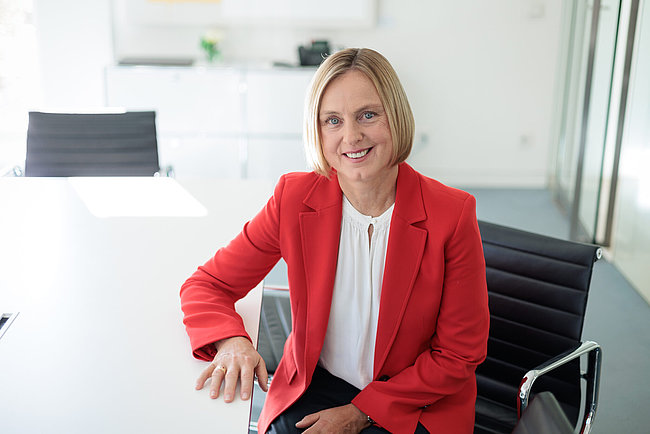
Monika Steger, Managing Director, Bayern Kapital: I am particularly encouraged by the growing maturity of the ecosystem. We are seeing significantly more startups founded by individuals who have already achieved a successful exit or held leadership roles at the first or second management level of successful startups. This practical experience has a noticeable impact on team quality, governance, and the speed of execution. At the same time, the market for larger funding rounds has also grown in Germany, although there is still room for improvement. This provides companies with planning certainty and greater scope to substantially develop technologies and business models, rather than being forced to scale up too early for short-term gains.
VC Magazin: As an investor, which technology are you currently focusing on in particular?
Büth: Our portfolio is broadly diversified. Among other things, we invest in life sciences, energy and recycling solutions, and semiconductor technologies. At the same time, we’re observing that the defense sector is gaining importance in the wake of the current shift in security policy. That’s why we’ve expanded our investment scope and are increasingly supporting companies in this segment as well. Even though this market is still in its early stages, we see growing potential.
Gabor: We focus on AI infrastructure and vertical applications that leverage “unfair advantages” through proprietary datasets. Pure GPT wrappers without their own data access aren’t enough. The real value lies in the application layer—for example, in gene sequencing or specialized ERP automation such as SAP migrations. A second core area is Physical AI, the interface between hardware and software. For instance, the combination of AI and robotics is a natural fit for Germany as a business location. This is where our industrial DNA meets modern sensor technology and computer vision.
Markovic: As a strategic investor in the field of intralogistics, we are currently focusing heavily on robotics, artificial intelligence, and cybersecurity. Technologies that enhance the resilience, security, and performance quality of technological solutions in industrial settings are our top priority. We focus on technologies that create tangible added value in the short term while simultaneously strengthening an industrial company’s technological competitiveness in the medium to long term.
Miczaika: The combination of AI and robotics has enormous potential, especially in the industrial sector. In AI, we’re seeing a shift from generic models toward highly specific applications. Robotics is becoming the standard in areas such as logistics, manufacturing, and healthcare—thanks to more powerful AI, edge computing, and significantly more affordable sensor technology. German startups have a structural advantage here due to their proximity to industry and a long tradition of engineering. Neura Robotics is a good example of this recipe for success.
Ruhnke: I deliberately avoid focusing on short-term technology trends; instead, I’ve pursued a clear impact strategy from the very beginning. In my view, it’s even dangerous to simply follow trends, because companies need to survive in the long term. Many are currently placing a strong emphasis on AI—we at CK Venture Capital are deliberately not doing so. We have too much respect for the U.S. and Asian markets, where significantly more capital and speed are at play. At the same time, AI technologies are evolving so rapidly that it’s difficult to identify sustainable winners early on. Instead, we invest selectively in impact startups, particularly in the areas of hardware and IoT, where we see robust long-term value creation and real solutions.
Steger: As a public investor, we try not to give undue preference to any one technology; rather, for over 30 years, we’ve maintained a clear focus on high-tech and deep-tech B2B business models across all industries. We take a rather sober view of hype-driven sectors and evaluate them based on realistic growth expectations. Take AI, for example—here, we examine business models very selectively. Applications with clear added value: yes; when it comes to mere “AI-labeled” models, we tend to be cautious. What matters most to us are sustainable unique selling propositions that offer genuine competitive advantages. One field where this is certainly possible, for example, is life sciences. Mega exits like Tubulis, where we’ve been invested since 2019, show that this sector can remain attractive with the appropriate risk profile.
VC Magazin: A piece of advice for young founders: To whom would you recommend starting a business in Germany, and to whom would you not?
Büth: Germany offers good starting conditions for technology-driven business models. This is also due to strong basic research. However, there is certainly still a great deal of potential in translating research-driven innovations into scalable commercial business models. At the same time, current global political developments are driving Europe’s desire to become more technologically sovereign and resilient. New opportunities for founders are emerging, particularly in areas such as semiconductors, energy, AI, and defense. They are supported by funding programs from state, federal, and EU governments, which help ensure that startups here can not only get off the ground but also grow successfully.
Gabor: I would recommend starting a business in Germany to anyone. After all, everything needed for a successful startup is available here: top-tier scientific and technical talent, enormous customer potential, experienced venture capital investors, an institutionally embedded culture of innovation, and a stable legal framework. I also see regulations such as the EU AI Act—which are often perceived as restrictive—as an opportunity: they foster deep consumer trust and create the legally secure framework for sustainable growth that I mentioned earlier.
Markovic: I would base the decision to launch a startup in Germany less on the product or business model and more on the mindset and growth strategy that should underpin the startup. In German-speaking countries, startups are establishing themselves as long-term winners by adopting structures that focus on sustainable, profitable growth and offering products with genuine added value. Models that rely on rapid growth, large and rapidly successive funding rounds, coupled with high valuations and subsequent IPOs, will not be successful. This is related to the volume of capital and the mindset of investors, but also to the capital market structures in German-speaking and European regions.
Miczaika: Germany is ideal for companies working at the intersection of deep tech and industrial applications. Our talent pool and engineering culture are real competitive advantages. For startups in other sectors, I would always question whether these founders can derive comparative competitive advantages from the location. Unfortunately, there are plenty of structural disadvantages.
Ruhnke: Germany is particularly well-suited for teams that benefit from proximity to industry, research, and demanding B2B customers—for example, in deep tech, climate tech, health, or industrial AI. Those who solve real problems here can build strong credentials. Germany is less suitable for purely consumer-driven or rapidly scaling models with high capital requirements. Other ecosystems are often faster and more willing to take risks in these areas.
Steger: Companies whose target customers are large corporations and larger medium-sized businesses—and which address specific productivity, efficiency, or transformation challenges in those sectors—are well-suited to this market. It is precisely here that Germany offers a broad pool of potential customers as well as a robust ecosystem of investors and industrial partners. For research-intensive projects, there are also good opportunities here to recruit the right top talent. The life sciences sector can be seen as a positive example of this, as demonstrated by the recent exit at Tubulis. By contrast, the market is more challenging for business models that depend heavily on short-term legislation or regulatory uncertainty; think, for example, of the govtech sector. Regardless of the industry, the following applies: Anyone who brings a resilient team, relies on a clear technology that solves problems, and addresses a large market in the process generally has good prospects in Germany.
VC Magazin: Thank you very much for the interview.
Article published in Venture Capital Magazin